Multi-disciplined specialists with demolition and enabling as our core
Oaklands School - London Borough Of Tower Hamlets
Refurbishment, Structural Alterations & Site Reconfiguration

Dedication and Skill
LONDON DIVISION
DETAILS
Sector: Education
Location: London Borough of Tower Hamlets
Services Delivered: Structural alteration, internal strip-out, concrete works, roof alterations and site works
PROJECT TEAM
Main Contractor: R.E.B Group Limited
Client: Oaklands School
Structural Works & Reconfiguration: In-house delivery
M&E Coordination: Specialist subcontract partners
SCOPE OF WORKS
-
Internal strip-out and selective demolition
-
Structural alterations and building reconfiguration
-
Reinforced concrete slab installation
-
Structural steel installation
-
Roof structure alterations
-
Installation of glazed atrium lantern
-
Mechanical & electrical installations
-
Internal fit-out and finishes
-
Site clearance and external works
STRUCTURAL RECONFIGURATION AND SELECTIVE DEMOLITION WITHIN A LIVE LONDON SCHOOL
R.E.B Group Limited was appointed to deliver a phased refurbishment and internal reconfiguration at Oaklands School in London. Operating within a live educational environment, the project required careful sequencing, strict health and safety controls, and experienced demolition contractors capable of delivering controlled demolition services without disruption to daily operations.
As an experienced building demolition company in London, our works began with a comprehensive internal strip-out and selective demolition package. This included the removal of redundant structural elements, controlled demolition of internal partitions, and preparation for major structural alterations.
CONTROLLED DEMOLITION & STRUCTURAL ALTERATIONS
The scheme required elements of structural demolition to enable the new open-plan layout. Working as a licensed and fully compliant contractor, our team carried out:
-
Selective demolition of internal structural constraints
-
Concrete cutting and removal to form new openings
-
Reinforced concrete slab installation to revised levels
-
Installation of structural steel supports
All demolition and site clearance works were carefully managed to maintain structural integrity and ensure a safe working environment within the operational school setting.
ROOF ALTERATIONS & ATRIUM INSTALLATION
Structural demolition works extended to the roof structure, where controlled alterations were undertaken to facilitate the installation of a new glazed atrium lantern.
This element required precise structural reconfiguration, temporary works coordination and concrete removal to accommodate the new feature. The completed atrium now forms a central architectural highlight, introducing significant natural daylight into the core of the building.
INTERNAL FIT-OUT & MODERNISATION
Following demolition and structural works, the project progressed into full internal refurbishment, including:
-
Mechanical and electrical installations
-
Ceiling systems and integrated lighting
-
High-quality internal finishes
-
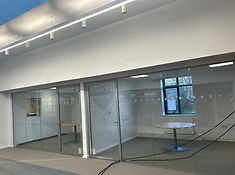
Formation of modern teaching and IT spaces
The completed learning environment reflects contemporary educational design standards while maximising flexibility and functionality.
SITE CLEARANCE & EXTERNAL WORKS
As part of the overall demolition services package, external works included site clearance, access improvements and coordination with boundary interfaces to enhance safety and usability across the site.
Our integrated approach — combining demolition and site clearance in London with structural alteration expertise — ensured programme efficiency and quality control throughout.
OUTCOME
The Oaklands School project demonstrates R.E.B Group Limited’s capability as a trusted demolition contractor in London, delivering controlled demolition services, structural alterations and full refurbishment within sensitive live environments.
By combining selective demolition, concrete removal, structural steel installation and high-quality fit-out works, we successfully transformed the existing facility into a bright, adaptable and future-focused learning environment.